Why WRWEO does science
Since 1995 we have worked with allies in the community to support, learn from and take part in science on The Bluff Trail and across the Woodens River watershed. To steward an area properly, you have to understand it — and understand the changes it is going through, particularly those caused by our own presence. Science is the most reliable way we have of gaining that understanding, and what it tells us shapes the stewardship work.
Contribute an observation
With nothing more than a phone or a camera, you can learn about the life in this area and contribute meaningfully at the same time.
-
Sign up for a free iNaturalist account
At inaturalist.ca. There is a getting started guide if you have not used it before.
-
Upload photo or sound observations from your visit
Plants, lichens, fungi, insects, birds, tracks, calls — anything you noticed. You do not have to know what it is; the community will help identify it.
-
It joins the trail's project automatically
Observations uploaded from the trail area are included in The Bluff Wilderness Hiking Trail project without you having to do anything else.
We only ask that you stay on the trail and cause the minimum of disturbance to the organisms you observe and to their habitat.
What your observations join
A limited survey of lichens on loops 1 and 2 alone turned up more than a hundred species. In 2018 a new kingdom of life was identified from dirt collected on this trail. The barrens hold broom crowberry and mountain sandwort; the forest below the Old St. Margaret's Bay Road holds old-growth red oak and red spruce. What grows and lives along the trail has the full account, and the wilderness page explains why it is worth protecting.
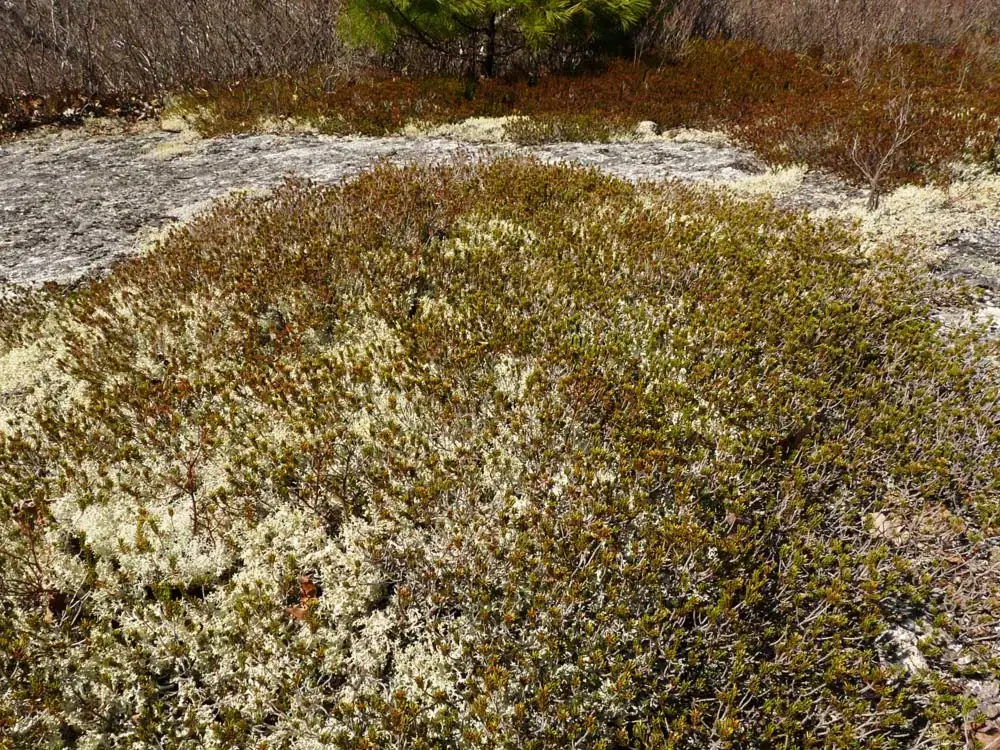
Every study carried out on this trail — the forest assessment, the sediment and microplastics work, the Acadia human waste study and the rest — is collected in the archive, alongside the water quality and fish habitat literature for the whole watershed.
Send us what you notice
Formal studies are only part of it. Please forward even casual observations about the Woodens system — algal blooms, the mayfly hatch, disturbances, pollutants, interesting nature observations — to info@wrweo.ca. If you know of documents about this watershed that are not listed on this site, send those too. We can scan printed documents and return the originals.